

10 Best Stainless Steel Water Tanks for Global Buyers?
Choosing among the 10 Best Stainless Steel Water Tanks for Global Buyers requires more than comparing prices or polished surfaces. The WHO/UNICEF Joint Monitoring Programme reported that 2.2 billion people lacked safely managed drinking water in 2022. The United Nations World Water Development Report also identifies rising pressure on freshwater systems, especially in rapidly growing cities. Storage quality now matters at household, industrial, agricultural, and emergency levels.
Ss Steel Water Tanks can offer strong durability, hygienic interiors, and reliable performance when correctly designed. Their value depends on steel grade, weld quality, insulation, foundation stability, and local water chemistry. A tank that works beside a cool European warehouse may fail sooner in a humid coastal region. Chlorides are not a small detail. Neither is poor drainage.
Corrosion specialist Dr. Mars G. Fontana stated, “Corrosion is an electrochemical process.” This short observation explains why material selection cannot stand alone. Buyers should check potable-water compliance, including NSF/ANSI 61 where applicable, and review standards such as AWWA D103 for bolted steel tanks. Manufacturer testing, traceable certificates, and documented cleaning procedures strengthen trust.
Still, no ranking is perfect. Capacity, transport distance, installation skills, and maintenance budgets change the final choice. A cheaper tank may become expensive after repeated repairs. A premium tank may be unnecessary for a low-risk application. This guide compares practical specifications, not marketing promises, helping global buyers assess Ss Steel Water Tanks with clearer evidence and fewer costly assumptions.
Types of Stainless Steel Water Tanks for Different Global Applications
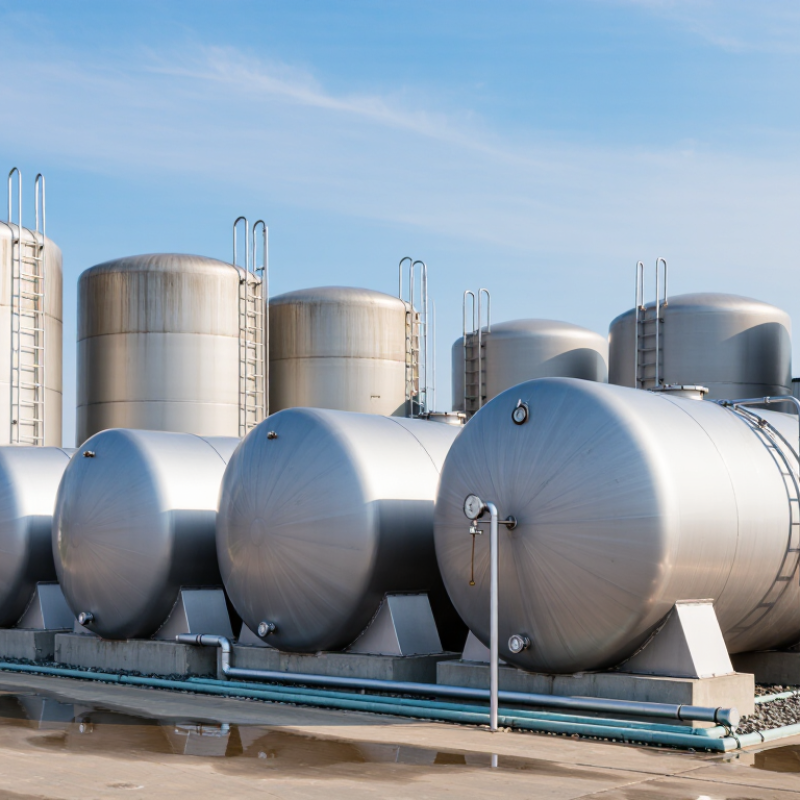
Stainless steel water tanks serve different needs, and tank shape matters as much as steel grade. Vertical tanks suit factories, farms, hotels, and municipal storage sites. They use a small ground footprint and support large capacities. Horizontal tanks work well beneath platforms or inside low-clearance buildings. Their wider base can improve stability during transport and installation.
Sectional tanks use bolted panels assembled on site. This design helps projects with narrow access routes or difficult urban locations. Panel replacement is also practical after long service. Welded tanks provide strong, smooth interiors and fewer joint areas. They are often selected for drinking water, process water, and emergency fire reserves. Insulated tanks help protect warm or chilled water in changing climates. Coastal facilities may need stronger corrosion planning, even when stainless steel is specified.
Material selection should match water chemistry, temperature, cleaning methods, and local maintenance skills. Common stainless grades can perform differently in chlorinated or salty environments. A 316-grade option may be more suitable for coastal exposure, but it is not automatically the best answer. I have seen projects overspend on metal while neglecting drainage and access. That mistake is expensive. Check weld quality, internal polishing, support foundations, overflow routes, and inspection openings before approval. A perfect tank choice rarely exists; the reliable solution balances capacity, hygiene, climate, transport, and future repairs.
| No. | Tank Type | Typical Capacity Range | Common Stainless Steel Grade | Recommended Applications | Main Advantages | Key Design Considerations | Typical Installation | Applicable Compliance References |
|---|---|---|---|---|---|---|---|---|
| 1 | Sectional Panel Water Tank | 1–5,000 m³ | 304 or 316L stainless steel panels | Commercial buildings, hospitals, schools, factories and municipal water storage | Modular construction, easy transportation, expandable capacity and convenient replacement of individual panels | Panel sealing, internal bracing, foundation flatness and access for inspection must be carefully designed | Ground-level, rooftop or purpose-built tank room | Project-dependent requirements such as EN 13280, NSF/ANSI/CAN 61 or AS/NZS 4020 |
| 2 | Vertical Cylindrical Tank | 500–100,000 m³ | 304L or 316L stainless steel | Municipal reservoirs, industrial process water, potable-water buffering and fire-water systems | Efficient use of land, good structural stability and wide customization range | Wind and seismic loads, shell thickness, roof design, foundation settlement and internal corrosion exposure | Outdoor ground installation on a reinforced concrete foundation | Local structural codes, potable-water material requirements and site-specific engineering standards |
| 3 | Horizontal Cylindrical Tank | 1–100 m³ | 304 or 316L stainless steel | Rural water supply, pressure-pump systems, transportable water storage and small commercial facilities | Low overall height, simple access and suitability for locations with height restrictions | Saddle supports, tank anchoring, drainage slope and protection against rolling or seismic movement | Ground level, skid-mounted or trailer-mounted | Local pressure-vessel rules where applicable; potable-water contact requirements for drinking water |
| 4 | Rooftop Stainless Steel Tank | 1–100 m³ | 304L; 316L for coastal or chloride-rich environments | High-rise buildings, hotels, apartment complexes and emergency domestic-water storage | Uses gravity for distribution, reduces pumping demand and provides local reserve capacity | Roof load capacity, wind uplift, seismic restraint, waterproofing, overflow routing and maintenance access | On a designed rooftop plinth or structural support frame | Local building, seismic, wind-load and potable-water regulations |
| 5 | Underground Stainless Steel Tank | 10–1,000 m³ | 316L or corrosion-protected 304L | Space-limited urban sites, rainwater harvesting, fire-water storage and landscape irrigation | Preserves surface space, protects stored water from sunlight and reduces visual impact | External soil pressure, buoyancy, groundwater protection, ventilation, leak detection and maintenance access | Below ground with engineered concrete or backfill support | Local excavation, structural, groundwater and environmental regulations |
| 6 | Insulated Stainless Steel Water Tank | 1–500 m³ | 304L or 316L with insulated outer cladding | Hot-water storage, cold-climate facilities, food processing and temperature-sensitive water systems | Reduces heat loss or heat gain and helps limit condensation on the tank exterior | Insulation type, vapor barrier, hygienic cladding, thermal expansion and cleaning access | Indoor or outdoor installation with weather-resistant cladding | Local thermal, fire-safety and potable-water material requirements |
| 7 | Jacketed or Coil-Equipped Tank | 1–200 m³ | 316L for hygienic or chemically demanding applications | Food and beverage plants, breweries, pharmaceutical utilities and controlled-temperature water storage | Allows heating or cooling through a jacket or internal coil without direct contact between utility fluid and stored water | Heat-transfer area, weld quality, cleanability, drainability and compatibility of the heating or cooling medium | Indoor process area or controlled outdoor installation | Hygienic design rules, food-contact requirements and applicable pressure-system regulations |
| 8 | Hygienic Vertical Tank with Spray Ball | 0.5–100 m³ | 316L stainless steel; sanitary internal finish | Pharmaceutical water systems, beverage production, cosmetics and high-purity utility water | Designed for clean-in-place operation, reduced dead zones and improved internal hygiene | Surface finish, sanitary welds, spray-ball coverage, slope toward drains and hygienic fittings | Indoor process room or clean utility area | Applicable hygienic design, GMP, food-contact and purified-water requirements |
| 9 | Rainwater Harvesting Tank | 1–500 m³ | 304L for general environments; 316L in coastal areas | Residential developments, commercial buildings, irrigation, toilet flushing and non-potable reuse | Long service life, good resistance to sunlight and suitability for urban water-reuse systems | Pre-filtration, first-flush diversion, mosquito protection, overflow control and separation from potable systems | Above ground, underground or integrated with a building service area | Local rainwater harvesting, plumbing, environmental and non-potable reuse regulations |
| 10 | Fire-Water Storage Tank | 20–5,000 m³ | 304L or 316L, selected according to site exposure | Warehouses, data centers, industrial plants, airports and commercial properties | Provides dedicated water reserves for sprinkler, hydrant or fire-pump systems | Required reserve volume, suction connections, low-level protection, overflow, inspection and fire-system reliability | Ground-level outdoor or dedicated fire-protection area | Applicable local fire codes, NFPA or other authority-approved fire-protection standards |