

How to Choose the Best PPR Heater Machine?
Choosing the right Ppr Heater Machine requires more than comparing wattage and prices. The machine must match your pipe sizes, material grade, jobsite conditions, and daily workload. A compact model may suit small repairs, while commercial installations need stable temperature control and stronger heating dies.
According to Daniel Mercer, a thermoplastic piping engineer with field experience, “A reliable fusion joint begins with accurate heat, clean tools, and patient handling.” This principle remains practical on busy worksites. Check whether the Ppr Heater Machine maintains a consistent heating range, usually around 260°C for PPR applications. Confirm that its thermostat responds quickly without large temperature swings.
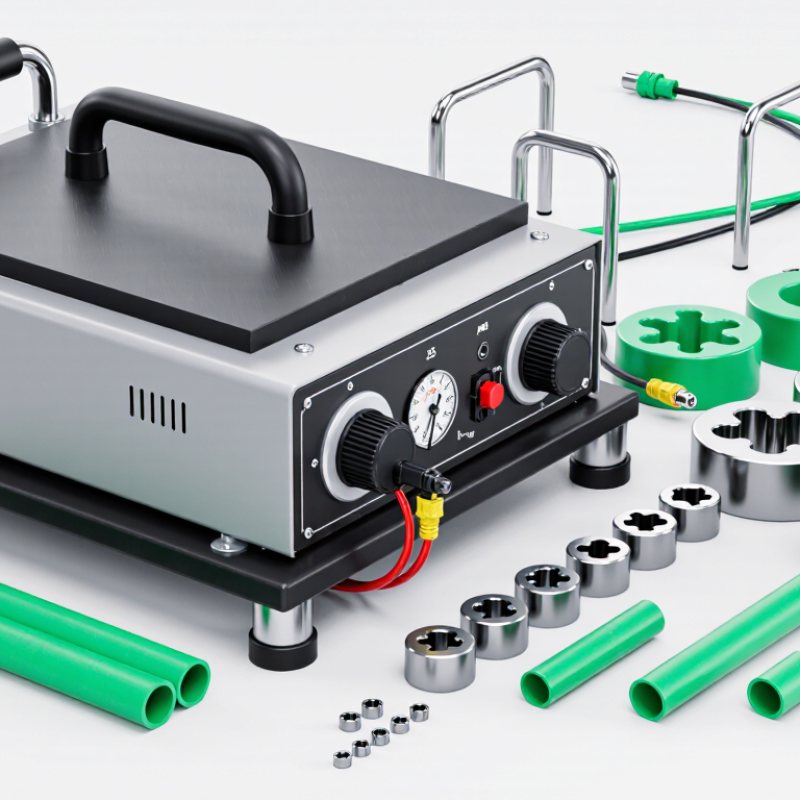
Look closely at the heating plate. A non-stick coating should be even, without exposed metal or rough edges. The handle must stay cool during repeated cycles. Also inspect the die set. Loose or poorly finished dies can create uneven melting around a 25-millimeter pipe.
Safety matters. Choose insulation, stable feet, grounded wiring, and clear temperature markings. A machine that heats quickly is not automatically better. Excessive heat can deform the pipe, while insufficient heat may produce a weak connection.
Do not ignore service support. Replacement dies, cables, thermostats, and technical guidance can save a project later. I have seen buyers focus on purchase price and regret limited spare parts availability. That mistake is easy to repeat.
The best choice depends on real use, not advertising claims. Compare tested performance, operator comfort, and warranty terms. If possible, make sample joints before purchasing. Cut one open and inspect the fusion area. A perfect-looking bead can still hide uneven bonding. That detail deserves honest attention.
What Is a PPR Heater Machine and How Does It Work?
How to Choose the Best PPR Heater Machine?
A PPR heater machine joins polypropylene random copolymer pipes through controlled heat and pressure. It uses an electrically heated plate with matching sockets or dies. The operator warms the pipe and fitting ends until their surfaces soften. Then, the parts are pressed together and held still while cooling. The result is a continuous plastic connection, not a threaded joint. Clean surfaces matter. Dust, moisture, or uneven cuts can weaken the fusion.
Machine quality depends on temperature stability, die alignment, heating power, and clamp strength. ISO 15874 provides requirements for PP-R piping systems, including dimensions and performance expectations. A suitable heater should maintain a steady working temperature and show clear readings. In practical workshop checks, a uniform melt bead is useful evidence. However, a smooth bead alone does not prove a perfect joint. Cooling time and insertion depth also matter. Not always.
Market demand supports careful equipment selection. Grand View Research valued the global plastic pipes market at about USD 43.78 billion in 2023 and forecast a 4.3% compound annual growth rate from 2024 to 2030. More installations may mean more rushed field work. That is where reliable controls become important. Choose a machine with interchangeable dies, insulated handles, stable feet, and replaceable heating components. Very cheap tools can work, but their temperature accuracy may drift. I would test several joints before approving production use. A small mistake can remain hidden inside the pipe.
Which PPR Heater Machine Specifications Matter Most?
How to Choose the Best PPR Heater Machine?
Which PPR Heater Machine Specifications Matter Most?
In practical pipe work, specifications matter more than impressive advertising. Start with the heating range and compatible die sizes. A useful machine should support the pipe diameters used on your projects. Check whether the included dies have a smooth, even coating. Rough surfaces can mark softened PPR. They can also make removal awkward.
Temperature control deserves careful attention. Look for a stable working range near 260°C, with clear indicators and an accessible thermostat. Digital controls can improve repeatability, but they are not automatically more accurate. Ask about calibration tolerance and temperature recovery after each joint. Heating power affects warm-up time, especially on cold sites. Higher wattage helps, but poor insulation wastes energy. The heating plate should distribute heat evenly across both sockets. Uneven heating can produce weak or visibly distorted joints.
I also examine the cable, handle, stand, and overall balance. A short cable may be frustrating beside a trench or crowded workbench. A stable stand keeps hot dies away from surfaces and reduces accidental contact. Confirm the supply voltage, plug type, and protection requirements before purchase. I once focused too heavily on wattage and overlooked die alignment. That mistake slowed every connection. The machine should feel solid without becoming tiring to carry.
How to Choose the Best PPR Heater Machine?
Which PPR heater machine specifications matter most?
Temperature stability and compatible die sizes usually have the greatest effect on weld quality. A practical machine should typically provide temperature control around 260°C, accuracy of approximately ±5°C or better, a heating time of about 10–20 minutes, suitable power for the pipe size, and effective electrical and heat protection.
How to Match the Machine to Your Pipe Welding Needs
Choosing the Best PPR Heater Machine for Your Pipe Welding Needs
The right PPR heater machine should match your pipe sizes, wall thicknesses, and working environment. A small repair crew may need a lightweight unit for pipes between 20 and 63 millimeters. Larger installation projects often require stronger heating plates and interchangeable sockets. Check the machine’s working range before purchasing. Compatibility matters more than appearance.
Temperature stability directly affects weld quality. Choose a model with clear controls and dependable heat regulation around the required fusion temperature. A fast-heating plate can save time, but uneven heat can weaken a joint. Test the surface temperature with a suitable measuring tool during inspection. Follow the pipe manufacturer’s technical instructions and recognized welding procedures.
Power supply also deserves attention. A workshop may support higher wattage, while a construction site may have limited electricity. Use a machine with enough power for the thickest pipe you regularly weld. Portability helps when work involves narrow rooms, roof spaces, or outdoor trenches. Clamps and stable supports are valuable for keeping pipes aligned. Small details matter.
Experience changes the choice. An experienced technician may prefer manual control for flexibility, while a beginner benefits from clear indicators and secure fixtures. Still, no machine removes the need for clean cuts, proper heating time, and steady pressure. A common mistake is choosing by maximum pipe diameter alone. Real projects may expose overlooked limits, especially with thick walls, cold weather, or long extension cables.
What Safety and Quality Features Should You Check?
Choosing a PPR heater machine starts with safety, not appearance.
A bright casing can still hide unstable temperature control. Check for a grounded power cord, heat-resistant handles, thermal insulation, and an automatic overheat cut-off. The control panel should show temperature clearly, even when gloves cover your hands.
IEC 60335-1 emphasizes protection against electric shock, overheating, and abnormal operation in household and similar electrical equipment. These principles are useful for workshop machines too.
The ILO and WHO estimated 2.9 million work-related deaths globally in 2016, with many linked to unsafe working conditions. Small safeguards matter.
Quality depends on repeatable heating.
Compare the machine’s temperature stability with the joining guidance in ISO 15874-2 and DVS 2208-1. Request a calibration record, not only a printed temperature range. Test several heating cycles with a thermometer, then inspect the socket coating for scratches, loose fittings, or uneven contact.
A reliable model should support common pipe sizes and hold fittings firmly without forcing them. I would also check the warranty process and spare-part availability.
Some inexpensive tools work well at first, but their thermostats drift after repeated use. That is easy to overlook.
Clean the heating plate after every job, and record abnormal smells, slow heating, or softened cables before the next installation.
How to Compare Prices, Brands, and Long-Term Value?
Choosing the best PPR heater machine requires more than comparing price tags. A cheap unit may look attractive, but unstable heat can weaken pipe joints. During installation, I check temperature recovery after several heating cycles. The display should remain clear and consistent. I also inspect the socket dies, power cable, stand, and carrying case. Small defects become expensive on busy job sites.
Brand comparison should focus on evidence, not popularity. Look for documented temperature accuracy, material quality, warranty terms, and accessible technical support. A reliable supplier should explain replacement parts without vague promises. Ask how quickly heating plates, handles, and dies can be replaced. A long warranty sounds useful, but unclear exclusions reduce its value. Read the details carefully.
Purchase price is only one part of long-term cost. A machine that heats evenly can reduce rejected joints, wasted pipe, and labor delays. Energy consumption also matters when the equipment runs for many hours. I once chose a lower-priced heater for a small project. The handle loosened early, and the saved money disappeared through repairs. That shortcut looked clever. It was not.
Before buying, compare the total ownership cost over three to five years. Include spare dies, servicing, transport, downtime, and operator training. Heavier equipment is not always better, especially when workers carry it between floors. A practical machine should feel balanced, heat quickly, and remain stable on uneven surfaces. Personal testing is valuable. Product descriptions rarely show everything.
How to Choose the Best PPR Heater Machine? - How to Compare Prices, Brands, and Long-Term Value?
| Comparison Dimension | Entry-Level Handheld | Professional Handheld | Bench-Mounted | Hydraulic or Workshop System | What to Check |
|---|---|---|---|---|---|
| Typical purchase price | US$30–80 | US$80–180 | US$180–500 | US$500–3,000+ | Compare the complete kit, not only the heater body. Prices are indicative and vary by region, included tooling, and certification. |
| Recommended workload | Occasional repairs and small installations | Regular site work and maintenance | Repeated workshop fabrication | High-volume production or large-diameter work | Select capacity according to daily joint quantity and pipe diameter range. |
| Common power rating | 800–1,000 W | 1,000–1,500 W | 1,500–2,000 W | 2,000–3,000 W or more | Higher wattage can improve heat recovery, but it does not automatically mean better joint quality. |
| Typical pipe-size coverage | 20–63 mm | 20–110 mm | 20–110 mm or 160 mm | 63–315 mm or larger, depending on the system | Confirm that the required die sizes are included and match the pipe standard used on your projects. |
| Operating temperature | Usually adjustable to approximately 260°C | Usually adjustable to approximately 260°C | Usually adjustable to approximately 260°C | Typically controlled around 260°C for PPR socket fusion | PPR socket fusion commonly uses about 260°C; always follow the pipe and fitting manufacturer’s procedure. |
| Temperature control | Basic thermostat and indicator lights | Improved thermostat or electronic control | More stable electronic control | Precise controller, gauges, or digital monitoring | Look for stable temperature recovery, clear indicators, and easy calibration or replacement of the controller. |
| Approximate heating-time reference at 260°C | 20 mm: about 5 seconds 32 mm: about 8 seconds | 20 mm: about 5 seconds 32 mm: about 8 seconds 63 mm: about 24 seconds | Similar times, with better recovery during repeated joints | Determined by the machine, pipe wall thickness, and approved procedure | These are common reference values, not universal settings. Use the approved fusion chart for the specific pipe system. |
| Portability | Excellent; usually lightweight | Very good; suitable for field work | Limited; requires a stable work surface | Low; often transported by vehicle | For ladders, confined areas, or remote sites, weight and cable length can matter more than maximum power. |
| Die coating and durability | Basic non-stick coating; more sensitive to scratches | Higher-quality non-stick coating | Durable replaceable dies | Heavy-duty replaceable tooling | Avoid damaged or contaminated dies; use only non-abrasive cleaning methods recommended for the coating. |
| Safety features | Heat-resistant handle and basic overheat protection | Thermal protection, insulated grip, and stable stand | Stable base, insulated handles, and improved temperature protection | Emergency stop, guarded heating area, and controlled clamping | Check electrical protection, grounding, insulation, and conformity with local workplace requirements. |
| Included accessories | Several common dies, stand, and storage case | Expanded die set, stand, case, and basic tools | Bench support, larger die range, and alignment accessories | Clamps, facing or alignment equipment, gauges, and specialized tooling | Calculate the replacement cost of missing dies, clamps, cables, and cases before comparing offers. |
| Expected service life | Often suitable for light or intermittent use | Suitable for regular professional use when maintained correctly | Designed for repeated workshop operation | Designed for intensive use with scheduled maintenance | Actual life depends on duty cycle, storage, cleaning, electrical conditions, and availability of spare parts. |
| Long-term value indicators | Low initial cost and simple operation | Balanced price, portability, and reliability | Higher productivity and better repeatability | Lower labor cost per joint and greater capacity | Consider purchase price, electricity, consumables, downtime, training, repairs, and resale value. |
| Best choice for | Home repairs and occasional small jobs | Plumbers and contractors working across multiple sites | Workshops producing many consistent joints | Large projects, fabrication facilities, and production environments | Choose the smallest machine that comfortably meets your diameter range and workload. |
Note: Price, power, temperature stability, included accessories, and service support vary by supplier and country. Always verify the technical specification, electrical requirements, applicable safety certification, and fusion procedure before purchase.