How to Source China EV Charging Stations?
Sourcing China Ev Charging stations requires more than comparing factory prices. Buyers must connect technical performance, safety documentation, supplier capability, and long-term service. A lower quotation can hide weaker components, limited testing, or expensive replacement parts. The right decision starts with the charging environment, not the catalog.
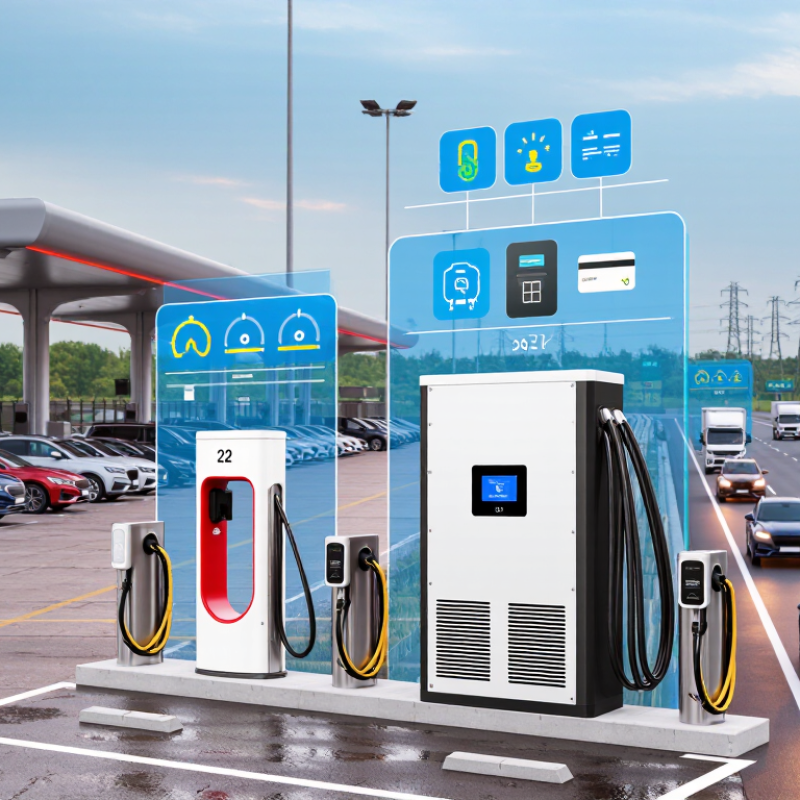
This guide examines how experienced buyers can define power requirements, connector types, installation conditions, payment terms, and expected usage. A 22 kW AC unit for an office car park differs greatly from a 180 kW DC charger beside a busy highway. Cable length, screen visibility, cooling design, software compatibility, and weather resistance all matter. Small details become costly later.
Supplier verification also deserves careful attention. Review factory records, product test reports, quality controls, export experience, and references from comparable projects. Request live video inspections when travel is impractical. Ask who manufactures the circuit boards, charging modules, and communication systems. A polished brochure is not proof. I have seen attractive samples perform well while later batches showed inconsistent assembly. That risk needs a written inspection plan.
Reliable sourcing includes independent pre-shipment checks, clear warranty language, spare-parts planning, and realistic delivery schedules. Certification requirements vary by destination, so qualified local professionals should confirm applicable rules before purchase. Software support is often underestimated. A charger may work on day one but fail to integrate with an operator platform later. This article offers a practical framework for evaluating Chinese suppliers, reducing avoidable risks, and building a procurement process based on evidence rather than optimistic promises. Some assumptions may still need revision after field testing.
Define Project Requirements for China EV Charging Stations
Sourcing China EV charging stations should begin with a clear project definition, not a supplier catalogue. Record the site location, parking layout, vehicle numbers, and daily charging demand. A small office car park needs different equipment from a highway facility. Measure available voltage, transformer capacity, cable routes, and installation space. Include weather exposure, dust, flooding risk, and winter temperatures. These details prevent expensive changes later.
Specify the charging power for each location. Decide whether you need alternating-current units, direct-current units, or both. Confirm connector requirements for the vehicles that will use them. Define cable length, screen functions, payment methods, network access, and load management. Ask for efficiency data, protection features, operating temperature ranges, and emergency shutdown design. Request test reports, manuals, wiring diagrams, and production quality records. Documents matter.
Your requirement sheet should also name the destination market and its applicable electrical and safety standards. Ask suppliers to explain certification scope, rather than accepting a certificate label without verification. Define warranty coverage, spare parts, remote support, response times, and technician training. Include packaging, delivery terms, installation responsibilities, and acceptance testing. My early plans often focused too much on unit price. That was a mistake. Service access and replacement parts can shape the real project cost. Leave room for pilot testing, because field conditions rarely match the spreadsheet.
Compare Charger Types, Power Ratings, and Compatibility Standards
When sourcing China EV charging stations, compare charger types before comparing prices. AC chargers suit homes, offices, and long parking periods. Common ratings include 7, 11, and 22 kW. DC chargers serve highways, fleets, and busy commercial sites. Their output may range from 30 kW to over 200 kW. Higher power is not automatically better. The vehicle, electrical supply, and site capacity must support it.
Tips: Request test reports, wiring diagrams, connector photographs, and a sample unit. Check whether the charger supports the required connector, voltage, current, and phase configuration. For China-based projects, GB/T compatibility may be essential. Export projects may require CCS2 or another regional connector. Also verify communication standards, such as IEC 61851 and ISO 15118, when smart charging is needed. Ask how firmware updates are controlled.
One practical mistake is checking the plug but ignoring the charging protocol. A connector can fit physically and still fail communication. Confirm vehicle compatibility with the charger’s pilot signals, grounding design, and maximum current. Inspect protection features, including residual-current monitoring, surge protection, emergency stopping, and enclosure ratings. Ask for operating tests in heat, rain, and low temperatures. I have found that promised power can drop under difficult conditions. That detail matters. Compare measured performance, service procedures, spare-part availability, and warranty terms. A cheaper station may become expensive when downtime is frequent.
Identify and Evaluate Qualified Chinese Charging Station Suppliers
Sourcing China EV charging stations starts with supplier qualification, not price comparison. The IEA’s Global EV Outlook 2024 reports that China held more than half of the world’s public charging points in 2023. It also recorded over 1.2 million public fast chargers. This scale creates experience, but it does not guarantee consistent quality.
Ask each supplier for recent factory-audit records, production photos, and traceable test reports. Verify compliance with IEC 61851, IEC 62196, and relevant destination-market requirements. For Chinese domestic projects, GB/T compatibility may be essential. Request samples before signing a large order. Inspect connector temperature, cable flexibility, enclosure sealing, screen readability, and emergency-stop response. Small details matter.
Look beyond the nameplate power rating. Review output stability, load management, payment interfaces, remote diagnostics, firmware control, and spare-parts availability. The International Energy Agency notes that public charging demand will expand sharply as electric vehicle adoption grows, increasing pressure on grid reliability and uptime. Ask suppliers to provide measured uptime data, not only marketing claims. Independent laboratory testing is stronger evidence than an impressive factory tour.
A supplier can pass certification and still fail during winter deployment. That risk deserves attention. Check warranty exclusions, software ownership, cybersecurity procedures, and response times for field repairs. Request references from similar climates and operating conditions. Some documents may be incomplete or outdated. Treat that as a warning, not an inconvenience. Personally reviewing one pilot installation often reveals more than a polished presentation.
When sourcing from Chinese charging-station suppliers, compare offers by application and rated power. The configurations shown represent commonly specified nominal outputs for residential, commercial, urban fast-charging, and high-power charging projects. Use them as a baseline when checking product specifications, certifications, safety protection, communication protocols, warranty terms, and after-sales support.
Verify Product Quality, Certifications, and Factory Capabilities
How to Source China EV Charging Stations?
Reliable sourcing begins with evidence, not attractive photos or low quotations. I start by requesting a complete specification sheet, wiring diagram, and recent test records. A sample unit should operate continuously under the stated voltage and current. I inspect its connector, cable flexibility, enclosure sealing, and emergency stop response. Look closely. Loose terminals often reveal weak assembly controls. I also compare the sample with production units during a factory visit or video inspection.
Certifications must match the destination market and the exact model. Ask whether reports cover the charger, cable, control board, and protection functions. Relevant standards may include IEC 61851, IEC 62196, or regional safety requirements. Certification marks alone are insufficient. Request certificate numbers, issuing laboratories, test dates, and model references. An accredited laboratory report is more useful than a scanned certificate without traceable details. I once accepted a report too quickly and later found that its rated power differed from the proposed unit.
Factory capability affects long-term reliability. Review assembly lines, aging-test areas, calibration records, incoming inspection, and defect-repair procedures. Ask how many chargers are tested before shipment and how failures are recorded. Check whether key components have controlled suppliers and documented replacement rules. Speak with the quality manager, not only the sales representative. A factory may have modern equipment but weak process discipline. No audit is perfect. I still leave room for independent pre-shipment testing, especially when software updates or outdoor installation conditions can change field performance.
| Verification Dimension | What to Verify | Recommended Evidence | Practical Acceptance Benchmark | Key Sourcing Risk |
|---|---|---|---|---|
| Charging Type and Output | Confirm whether the product is AC charging, DC fast charging, or both. Check rated voltage, current, connector configuration, and maximum output power. | Complete technical datasheet, electrical schematic, nameplate photo, and sample test report. | The stated output, input range, connector type, and charging mode should match the purchase specification and the target market. | Marketing power may refer to a peak value rather than continuous rated output. |
| Electrical Safety | Review protection against overcurrent, overvoltage, short circuit, ground fault, leakage current, overtemperature, and emergency stop conditions. | Protection-function list, circuit diagrams, risk assessment, and laboratory test records. | All protective functions should be demonstrated on a production-equivalent sample under normal and fault conditions. | A certificate alone does not prove that every optional configuration has been tested. |
| Applicable Standards | Identify the standards relevant to the destination country and product type, including charging-system, connector, EMC, and electrical-safety requirements. | Standards compliance matrix showing the exact model, revision, test scope, and applicable clauses. | The compliance matrix should reference current or contractually accepted editions of standards such as IEC 61851 and IEC 62196 where applicable. | A general “CE” statement is not equivalent to a complete technical compliance file. |
| Certifications and Market Access | Verify whether the required conformity marks, national approvals, and grid-related approvals are valid for the intended sales region. | Certificate copies, certificate numbers, issuing-body details, scope pages, validity dates, and factory address. | The certificate holder, manufacturing site, model range, rated parameters, and intended market should correspond to the supplied product. | Certificates may cover only a base model and exclude higher-power or modified versions. |
| Communication Protocols | Check support for charger-to-backend communication, remote monitoring, firmware updates, load management, and roaming interfaces. | Protocol declaration, API documentation, integration test report, and live demonstration. | OCPP 1.6 JSON or OCPP 2.0.1 support should be verified according to the buyer’s backend requirements; claimed features must work in testing. | Protocol support may be limited to basic functions or require a proprietary software service. |
| Connector and Cable Quality | Inspect connector standard, cable cross-section, cable length, bend resistance, locking mechanism, temperature sensing, and strain relief. | Component specifications, supplier declarations, dimensional drawings, and repeated plug-in test records. | The connector and cable assembly should be rated for the declared current and environmental conditions, with no excessive heating or mechanical looseness. | Unverified substitute components can change thermal performance and certification status. |
| Ingress and Environmental Protection | Confirm enclosure protection, impact resistance, operating temperature, humidity tolerance, corrosion resistance, and outdoor installation suitability. | Environmental test reports, enclosure drawings, material declarations, and product installation manual. | The stated IP and impact ratings should apply to the complete assembled unit, not only to a separate enclosure component. | Cable entry points, display openings, and service doors are common weak points in outdoor installations. |
| Thermal Management | Evaluate natural cooling, fan cooling, or liquid cooling; verify derating behavior, fan monitoring, filter maintenance, and thermal alarms. | Thermal test curves, internal temperature records, fan or pump specifications, and fault-alarm demonstration. | The charger should maintain safe operation at the declared ambient temperature and clearly reduce output or stop when thermal limits are reached. | Nominal output may not be continuously available in hot climates or with restricted airflow. |
| Factory Quality System | Assess incoming inspection, process control, traceability, calibration, nonconforming-product handling, and final inspection procedures. | Quality-management certificate, process flow chart, inspection plans, calibration records, and anonymized nonconformance reports. | Every unit should have a traceable serial number, documented final test results, and a controlled bill of materials. | Trading companies may present third-party factory documents without controlling production quality. |
| Production Capacity | Verify assembly lines, testing equipment, staffing, monthly capacity, component availability, and ability to handle customized configurations. | Factory audit, equipment list, production records, capacity plan, and recent shipment evidence with confidential data removed. | Capacity should be supported by actual equipment and testing throughput rather than only by a stated monthly quantity. | Capacity claims may combine several facilities or depend on subcontracted assembly. |
| Factory Acceptance Testing | Define tests for insulation resistance, dielectric strength, grounding, output accuracy, communication, emergency stop, and protective shutdown. | Buyer-approved inspection checklist, automated test records, calibrated instrument list, and sample test video. | The supplier should test every finished unit or apply a documented sampling plan agreed before production. | Visual inspection cannot replace electrical safety and functional testing. |
| Reliability and Life Testing | Review accelerated aging, power cycling, connector insertion cycles, vibration, temperature cycling, and continuous-load testing. | Test plans, duration, sample quantity, failure criteria, raw data, and corrective-action records. | Test conditions should represent the intended installation environment and declared duty cycle, with failures documented transparently. | A short demonstration test does not establish long-term field reliability. |
| Software and Cybersecurity | Check user authentication, role permissions, encrypted communication, secure firmware updates, event logs, password policy, and vulnerability handling. | Cybersecurity questionnaire, network architecture, firmware-release procedure, penetration-test summary, and vulnerability-response policy. | Remote access should be controlled, software versions should be traceable, and critical events should be logged for investigation. | Connected chargers can create operational and data-security exposure if default credentials remain active. |
| Spare Parts and Service | Confirm availability of contactors, control boards, fans, screens, cables, connectors, fuses, filters, and other replaceable parts. | Spare-parts list, recommended inventory, repair manual, response-time commitment, and training plan. | Critical spare parts should have defined lead times, compatible revision numbers, and documented replacement procedures. | A low purchase price can become expensive if proprietary parts or remote service fees are required. |
| Warranty and Claims Control | Clarify warranty period, coverage, exclusions, replacement process, response time, software support, and responsibility for shipping defective units. | Signed warranty terms, service-level agreement, claims workflow, and failure-rate reporting format. | Warranty terms should cover the complete charger and clearly define remedies for repeated failures and safety-related defects. | Warranty may be invalidated by installation, climate, grid-quality, or unauthorized-maintenance exclusions. |
| Pre-Shipment Inspection | Inspect quantity, labeling, accessories, packaging, firmware version, electrical performance, appearance, and documentation before shipment. | Approved inspection standard, inspection report, serial-number list, photographs, and independent inspection option. | Shipment should be released only after all critical defects are closed and sample results meet the agreed acceptance criteria. | Testing only one sample is insufficient when models, firmware, or components vary across the order. |

Manage Pricing, Shipping, Installation, and After-Sales Support
How to Source China EV Charging Stations?
A reliable sourcing process begins with landed cost, not the factory price. Request an itemized quotation covering charger power, cable length, connector type, enclosure rating, software fees, spare parts, packaging, and testing. Compare shipping terms carefully, including freight, insurance, customs handling, and delivery responsibilities. Confirm the agreed Incoterm in writing. Ask how long the price remains valid. A low quote can hide expensive accessories or unclear service charges.
Shipping requires practical control. Review production samples before approving mass manufacturing. Arrange pre-shipment inspection, serial-number records, pallet protection, and moisture-resistant packaging. Confirm export documents with a qualified customs broker. Installation also needs planning before the equipment leaves China. Check site capacity, grounding, cable routes, network coverage, and local permit requirements. Use licensed electricians where required. Remote commissioning can reduce delays, but a local technician should verify safety and communication settings.
After-sales support should be measured, not promised. Request warranty terms, response times, replacement-part procedures, firmware policies, diagnostic access, and technical training. Keep critical spare parts near the installation site. In one project, the hardware arrived on time, but unclear connector labeling slowed installation. That mistake was avoidable. A simple installation guide, photos, and live video training would have helped. I now treat documentation as part of the product, not an optional extra. Test a small batch before scaling orders. Expect some revisions. Reliable sourcing improves through evidence, records, and honest review.