What is a Switching Power Supply and How Does It Work?
A Switching Power Supply (SPS) is a vital component in modern electronics. It converts AC to DC efficiently. With a projected market growth of 5.1% annually, the SPS demand is rising. Industry reports show that by 2026, the global market is expected to exceed $38 billion. Its efficiency is crucial in various applications, including computers, smartphones, and renewable energy systems.
The principle behind a Switching Power Supply lies in its ability to control voltage and current through rapid switching. This process reduces energy loss, making it more efficient than traditional linear power supplies. However, challenges exist. Switching noise and electromagnetic interference can affect performance. Proper design is essential to minimize these issues.
While SPS technology offers significant benefits, potential drawbacks need consideration. Users should evaluate their specific needs carefully. An SPS can be overkill in simpler applications, leading to wasted resources. Balancing performance and efficiency is key for optimal use in today’s fast-paced technology landscape.
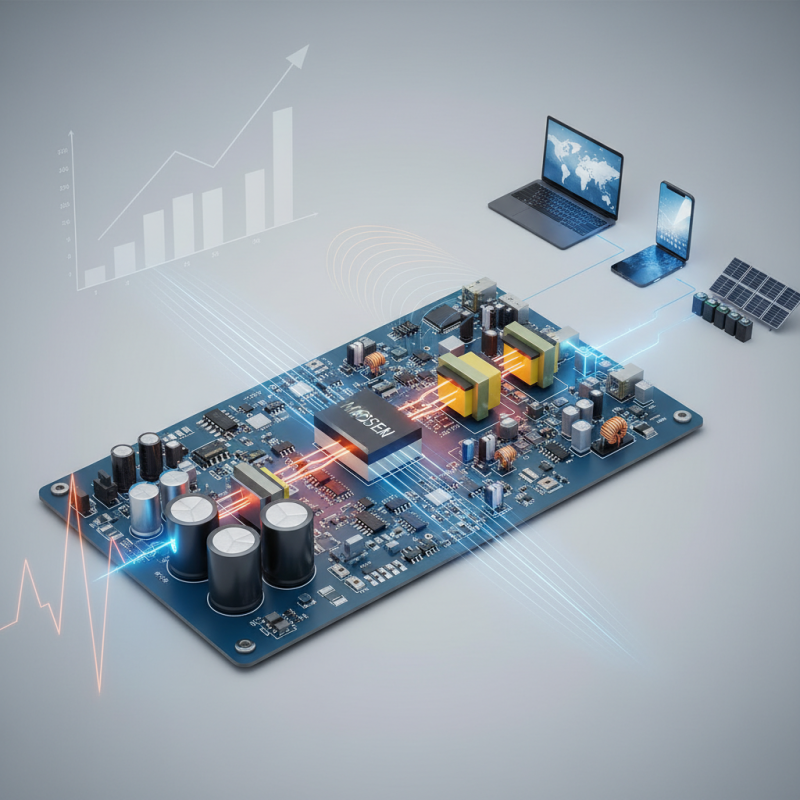
What is a Switching Power Supply? Definition and Key Terminology
A switching power supply (SPS) is essential in modern electronics. It converts electrical power efficiently, ensuring devices operate effectively. The term "switching" relates to how the power is regulated. The system uses high-frequency switching transistors to manage voltage levels. This method enhances efficiency, often exceeding 90%.
Key terminology includes "input voltage," "output voltage," and "switching frequency." Input voltage is the power fed into the system. Output voltage is the regulated power supplied to the device. Switching frequency is crucial; typical ranges vary from 20 kHz to several megahertz. Higher frequencies can reduce the size of components but may introduce noise.
However, some issues demand attention. The complexity of SPS designs can complicate troubleshooting. Poor filtering can lead to electromagnetic interference. According to industry reports, around 20% of power loss in switching supplies is due to inadequate design. Understanding these factors becomes vital. A well-designed SPS not only improves efficiency but also enhances device longevity. Balancing performance and design remains a challenge for engineers.
The Basic Components of a Switching Power Supply and Their Functions
A switching power supply is composed of several essential components. Each part plays a vital role in the power conversion process. The key parts include the transformer, inductor, capacitor, and various control circuits.
The transformer in a switching power supply adjusts voltage. It can step up or down the voltage efficiently. This allows for flexibility in different applications. Inductors filter noise and stabilize the output. They are crucial for maintaining a steady power flow. Capacitors store energy and smooth the output voltage. Without them, the power supply might fluctuate.
Tips: Keep in mind that a poorly designed layout can affect performance. Ensure proper thermal management, as heat can lead to inefficiencies. Also, using higher-quality components can improve reliability and lifespan.
Control circuits manage the switching process. They adjust the frequency and duty cycle to optimize performance. This dynamic operation allows for better efficiency compared to linear power supplies. However, these circuits can introduce complexities. Debugging and modifying them might require experience.
Another tip: always consider voltage spikes during design. These can damage sensitive components. Safety precautions are essential. Thus, learning about each component's function is key to creating a successful power supply. A little knowledge can go a long way in addressing these challenges.
How a Switching Power Supply Converts Power: The Role of Switching Elements
A switching power supply is an essential component in many electronic devices. It converts electrical power efficiently. The heart of this system lies in the switching elements. These elements rapidly turn on and off, controlling the flow of electricity. This process is different from traditional linear power supplies, which are often bulkier and less efficient.
Switching elements include transistors and diodes. They manage the electrical flow by creating pulses. These pulses allow the power supply to adjust the output voltage. When these components function well, you achieve high efficiency. However, if they fail or are poorly designed, issues can arise. Sometimes, components may generate unwanted noise. This noise can interfere with sensitive electronics.
The switching process generates heat and electromagnetic interference. Proper design is crucial to minimize these effects. Overheating can lead to the failure of the power supply. It’s essential to balance efficiency with heat management. Understanding these elements helps in refining designs. Not every design is perfect. Continual improvements are necessary for optimal performance.
Efficiency of Switching Power Supplies at Different Load Levels
Efficiency Metrics: Comparing Switching Power Supplies to Linear Power Supplies
Switching power supplies have gained popularity due to their efficiency. Unlike traditional linear power supplies, switching models convert electrical power using a high-frequency switching technique. This approach allows for reduced energy loss and improved performance. However, it's essential to compare their efficiency metrics carefully.
Linear power supplies generally provide cleaner outputs. They exhibit minimal noise, making them ideal for sensitive applications. Yet, they tend to waste more energy as heat. Many devices may not handle this excess heat well. Switching power supplies, while efficient, can produce electromagnetic interference. This may compromise device performance.
Real-world scenarios show that the choice between these power supplies directly impacts energy consumption. A well-designed switching power supply can operate at over 90% efficiency. In contrast, linear options often struggle to achieve even 70%. The challenge lies in selecting the right one for your specific needs. Balancing efficiency with output quality is crucial.
Applications of Switching Power Supplies in Modern Electronics Industries
Switching power supplies are integral to the modern electronics industry. They efficiently convert electrical energy, managing voltage and current with precision. This efficiency is crucial in devices like computers, smartphones, and other electronics. Their compact design allows for versatile applications in various settings.
In telecommunications, switching power supplies ensure that signals remain clear and uninterrupted. They handle power fluctuations and maintain stable operation. In industrial automation, they power everything from sensors to controllers. This versatility is undeniable, yet the design process can be challenging. Often, engineers must balance efficiency with cost-effectiveness.
Despite their benefits, switching power supplies are not without issues. Electromagnetic interference can be a concern, impacting sensitive equipment. Moreover, heat management is crucial; inadequate cooling can lead to failure. These challenges require constant innovation and adjustment. The industry must continually reflect on these factors to enhance reliability and performance.
What is a Switching Power Supply and How Does It Work? - Applications of Switching Power Supplies in Modern Electronics Industries
| Application | Input Voltage (V) | Output Voltage (V) | Efficiency (%) | Commonly Used in |
| Computer Power Supply | 100-240 | 12 | 85-90 | Desktops, Laptops |
| Television | 100-240 | 19 | 80-85 | LED, LCD TVs |
| Smartphones | 5-20 | 5-9 | 85-95 | Charging, Operation |
| Telecommunication Equipment | 48 | 5-48 | 90-95 | Servers, Routers |
| LED Lighting | 100-240 | 12-24 | 80-90 | Commercial, Residential Lighting |