Why Choose Lithium Iron Batteries for Your Business?
Why Choose Lithium Iron Batteries for Your Business?
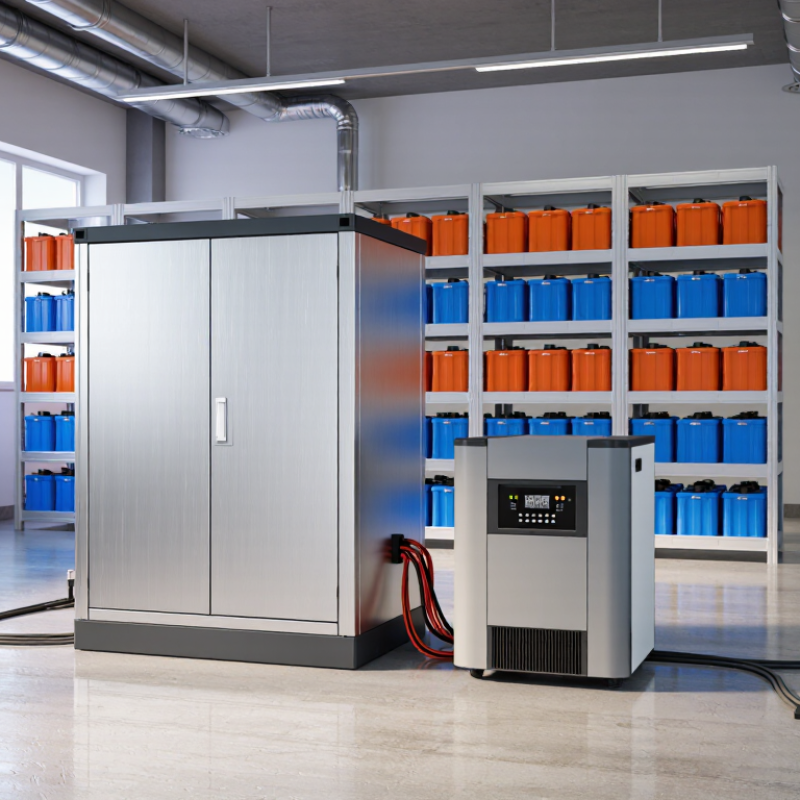
A battery decision can shape daily operations for years. For businesses, Lithium Iron Batteries, commonly called lithium iron phosphate or LFP batteries, offer a practical mix of long service life, thermal stability, and dependable output. They can suit solar storage, commercial equipment, and backup power systems where steady performance matters more than headline energy density. Picture a battery cabinet beside an inverter, supporting evening operations after solar production fades. That is where careful chemistry choices become real business decisions.
Battery researcher Dr. Shirley Meng’s work highlights the importance of evaluating materials across performance and durability. A concise paraphrase of that broader research perspective is: “Assess a battery by its safety, service life, and real operating needs—not by one specification alone.” This is a paraphrase, not a verbatim quotation. The distinction matters. Buyers should confirm cycle-life conditions, usable capacity, temperature limits, warranty terms, and compatibility with their equipment. A quoted lifespan may assume controlled conditions that differ from a hot warehouse or frequent deep cycling.
LFP batteries are not the perfect answer for every site. Their lower energy density can require more space, and initial purchase price may not tell the whole cost story. Still, fewer replacements and predictable operation can support stronger long-term planning. Ask suppliers for test conditions, installation guidance, and documented performance data. Then compare those details against your actual load profile. A little skepticism helps. The right choice is the one your business can maintain, monitor, and rely on—not merely the one with the strongest sales claim.
Lithium Iron Phosphate Basics: LFP Cells Have a Nominal Voltage of 3.2 V
Lithium Iron Phosphate Basics: LFP Cells Have a Nominal Voltage of 3.2 V
A lithium iron phosphate cell is commonly rated at a nominal voltage of 3.2 volts. “Nominal” describes a useful reference value, not the voltage at every moment. A fully charged cell may reach around 3.6 to 3.65 volts, while its voltage falls during discharge. Exact limits depend on the cell maker’s specifications and the battery management system.
For a business, this number helps estimate the voltage of a battery pack. Connect cells in series, and their voltages add: four cells provide a nominal 12.8 volts. That can suit equipment designed around a 12-volt battery, but checking the equipment’s permitted voltage range still matters. A label alone is not enough. The pack also needs suitable charging controls, wiring, and protection against unsafe operating conditions.
LFP voltage often stays fairly steady through much of a discharge cycle. That can make equipment operation predictable, though voltage alone may not show remaining capacity clearly. A warehouse cart might keep moving at a steady pace, then show a sharper voltage drop near empty. Real-world results vary with temperature, load, cell age, and charging habits. It is tempting to treat 3.2 volts as a guarantee; it is only a starting point. A little less tidy than the spec sheet suggests.
Safety Profile: LFP Cathodes Offer Greater Thermal Stability Than NMC
For a business choosing lithium iron phosphate (LFP), cathode chemistry matters when heat builds inside a battery.
LFP’s phosphate-based structure is more thermally stable than the layered oxide structure used in nickel manganese cobalt (NMC) cells. Doughty and Roth’s 2012 review in ECS Interface discusses the role of cathode chemistry in lithium-ion battery safety, while Feng and colleagues’ 2018 review in Energy Storage Materials examines how thermal runaway can develop and spread.
These sources support a useful distinction: LFP generally offers greater resistance to heat-driven cathode breakdown, but it is not immune to failure.
That distinction is easy to overlook.
A stable cathode does not make an entire battery system risk-free. Cell quality, charging controls, enclosure design, cooling, and installation all affect how a fault develops. In practical terms, a warehouse operator should consider what happens if one cell overheats: Can heat reach neighboring cells? Will monitoring detect the change early?
LFP can lower some thermal risks compared with NMC, yet system-level safeguards remain essential.
Chemistry helps; it cannot do the whole job.
Energy Storage Efficiency: LFP Systems Commonly Achieve 90–95% Round-Trip Efficiency
Why Choose Lithium Iron Batteries for Your Business?
Energy Storage Efficiency: LFP Systems Commonly Achieve 90–95% Round-Trip Efficiency
For a business, round-trip efficiency shows how much stored electricity remains available after charging and discharging. Lithium iron phosphate systems commonly reach 90–95% under suitable operating conditions. In practical terms, 100 kilowatt-hours sent into storage may return roughly 90 to 95 kilowatt-hours. That can reduce energy losses when solar power is stored for evening use or when a facility shifts demand away from peak periods. Small losses add up.
The exact result depends on the whole installation, not just the battery chemistry. Inverter performance, temperature, charge rate, system age, and standby consumption all matter. A battery room that runs hot, or equipment left idling overnight, may deliver less than a specification suggests. Compare measurements at the system level, and check whether quoted figures include inverter losses. A spreadsheet can make performance look cleaner than a busy site feels; actual load patterns may surprise you.
Tips: Ask for tested round-trip efficiency at your expected power level. Track energy entering and leaving the system over several weeks, including quieter operating days. Keep the battery within its recommended temperature range, and review ventilation and maintenance needs with a qualified installer. Check the assumptions behind any estimate.
Why Choose Lithium Iron Batteries for Your Business? — Energy Storage Efficiency: LFP Systems Commonly Achieve 90–95% Round-Trip Efficiency
| Metric |
Typical Value or Example |
What It Means for a Business |
| Round-trip efficiency (AC-to-AC) |
Commonly 90–95% for LFP systems; actual results depend on system design and operating conditions. |
Indicates how much of the electricity put into storage can be delivered back as usable electricity. |
| Energy charged |
100 kWh (example input) |
The electricity supplied to the storage system during charging. |
| Energy returned |
About 90–95 kWh from a 100 kWh input |
A simple illustration of the stated round-trip efficiency range, measured over a complete charge-and-discharge cycle. |
| Energy loss |
About 5–10 kWh per 100 kWh input |
The difference between energy charged and energy returned in the example; losses may arise from conversion, battery operation, and auxiliary loads. |
| Measurement boundary |
AC-to-AC system measurement |
Includes energy conversion through the storage system; confirm whether quoted figures include standby and auxiliary consumption. |
| Factors affecting efficiency |
Power-conversion equipment, charge and discharge rate, temperature, state of charge, and system controls |
Compare efficiency figures using the same test conditions and system boundary when evaluating solutions. |
Note: The energy figures are illustrative calculations based on a 100 kWh input and a 90–95% round-trip efficiency range. Actual performance varies by system and operating conditions.
Business Applications: Match LFP’s 90–160 Wh/kg Energy Density to Operating Needs
Why Choose Lithium Iron Batteries for Your Business?
Lithium iron phosphate batteries can suit businesses that need predictable daily cycling and stable operation. Their energy density often falls around 90–160 Wh/kg, depending on cell design and system configuration. That range helps compare storage options, but it does not tell the whole story. At pack level, casing, wiring, cooling, and battery controls add weight. A compact cell rating may not reflect the installed system.
Match capacity to the workday, not just the equipment label. A pallet truck moving loads across a warehouse needs enough energy for its shift, plus a sensible reserve. Backup systems may value dependable runtime more than minimum weight. Measure actual load, peak demand, duty cycle, and available charging time. Small details matter. Cold rooms and frequent high-power draws can change real-world performance.
Tips: Compare usable pack-level Wh/kg, not cell figures alone. Log energy use across several ordinary shifts. Include reserve capacity, charger limits, and installation space. Leave room for uncertainty; operating patterns rarely stay perfect. A design that looks efficient on paper may feel restrictive after a busy week. Recheck sizing when routes, loads, or shifts change.